
The best content writing services for SaaS do one thing generalists can’t: make a technical product credible to the evaluators who test it and clear to the economic buyer who makes the purchase. This guide covers five things to check in a SaaS content writer, the red flags hiding in any writing sample, honest cost bands, and how to choose between a freelancer, an agency, and a platform. You’ll walk away able to vet a writer with confidence.
You’ve likely been in this situation: You’re reviewing your SaaS blog, and everything looks fine on paper; the grammar is clean, the structure works, and the content looks readable. But when you look at the results, there are no meaningful leads, demo requests, or pipeline movement, and you’re wondering why your content isn’t contributing to revenue or growth.

The cost of that gap can be significant. If you’re spending $53,000 a year on publishing content, for example, that’s about $4,400 every month going into content that needs to do more than attract traffic. If as little as 20% of that investment isn’t producing meaningful business value, you’re potentially losing about $10,600.
This is why the quality of your SaaS content writer is important. A writer who understands your product, your customers, and the problems you’re solving can create content that does more than rank: problem-first content that can attract the right audience and move potential buyers closer to a decision.
In this guide, I’ll explain what quality SaaS content looks like and how to identify a B2B SaaS content writer who actually understands your product and can contribute to the pipeline.
If you want a SaaS content partner who understands SaaS content and how to drive the right business results for your company, reach out now.
Key Takeaways
- SaaS content bridges two jobs: proving technical capability to evaluators and business outcomes to economic buyers. B2B and SaaS content writing that only does one loses the deal.
- Prioritize five things when evaluating a SaaS writer for hire: product fluency, buyer research, sales-cycle understanding, technical accuracy, and search plus AI visibility.
- One sample tells you most of it. Feature dumps, rephrased documentation, and name-swappable posts are disqualifiers.
- Go with a model that suits your product and company; freelancers, agencies, and content outsourcing platform each have their unique characteristics.
- Cheap SaaS blog writing services are usually the most expensive once you count rewrites and manager hours.
- AI visibility is now a hiring criterion. If AI engines can’t cite your content, buyers never see it.
What Makes SaaS Content Different
SaaS content has to make a technical product credible to technical evaluators while staying clear to the economic buyer who approves the budget. Generalists often default to surface-level feature descriptions, or they oversimplify until the content says nothing an evaluator trusts.
Take one feature, say, role-based access control in a CRM. For the technical evaluator, the writer has to specify how permissions are scoped, how they inherit, and what an admin can enforce, so they have a full view of what they can do. For the economic buyer who is likely a key decision maker, the writer needs to make them understand how the feature results in fewer failed audits and less time spent provisioning access. Good SaaS content builds that bridge from technical capability to business outcome.
Adopting this type of approach to SaaS content is crucial because of how SaaS products get bought. In SaaS, long sales cycles, a buying committee, a technical product, and diverse pricing models all change what content has to accomplish. This complexity is why not every content writer understands SaaS. It’s also why many SaaS blogs end up being written for the product rather than the buyer. They’re appealing to product teams but failing to address buyer needs and, ultimately, drive business conversions.
Your SaaS content must accomplish your business goals because sometimes your content is the only sales conversation your prospects get. According to the Edelman and LinkedIn 2025 B2B Thought Leadership Impact Report, 71% of 1,934 US business executives across a wide range of industries and company sizes are hidden buyers who have little-to-no direct sales interaction.
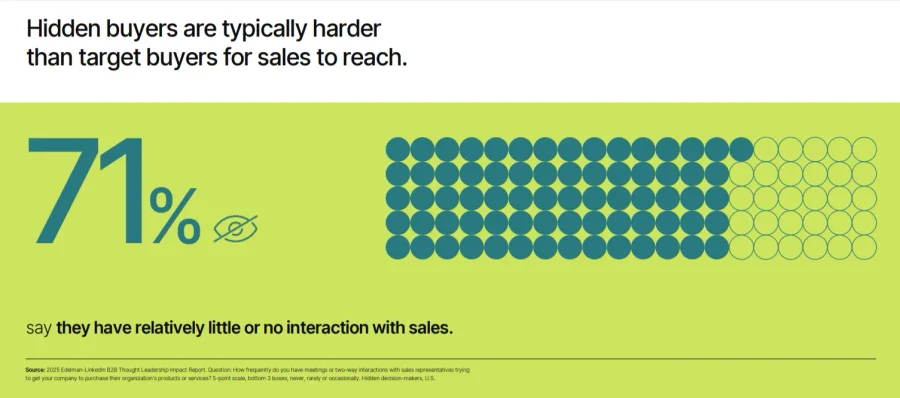
Your SaaS content does the selling to these people you’ll likely never meet.
Because your SaaS content is critical to converting these buyers, you must judge your writers on more than just clean grammar and readability.
The 5 Things to Evaluate in a SaaS Content Writer
Prioritize five things when evaluating a SaaS content writer: product fluency, buyer research, sales-cycle understanding, technical accuracy, and search plus AI visibility.
1. Can the SaaS content writer explain your product without oversimplifying it?
Product fluency is the first filter because a SaaS purchase runs through buyers who test the product before they can fully trust the copy. A technical evaluator pressure-tests every claim. Get one detail wrong, and they distrust the whole piece, then relay that doubt to the economic buyer.
What good looks like: A sample explains a feature by the job it does for a named persona — what it replaces, what work it removes, what the evaluator starts/stops doing immediately, etc. It genuinely names use cases, benefits, limits, and tradeoffs, which is the clearest signal that the writer actually understands the product beyond its marketing page.
What bad looks like: Content that looks like rephrased documentation, a feature dump with no buyer context, content that reads like it could’ve been written for any company, or product mentions that fit in like square pegs in round holes.
How to test this: Give the SaaS writer a short technical topic, then run a product name swap on the draft. If you can paste a competitor’s name over yours and nothing about the content goes wrong, the writer never learned your product.
Ask them: Explain one of our features to a skeptical evaluator, then to the CFO who signs off, and note what changes between the two.
2. Does the SaaS writer research your buyers, or just your product?
Buyer research is crucial for a piece of content to rank, read well, and drive conversions. A SaaS deal is decided by a committee — champions, technical evaluators, and economic buyers — and each one says yes for a different reason. A writer who researches only your product speaks to none of them precisely. One who researches your buyers writes to the objection each stakeholder raises before they raise it. Think of the last time you read content that read like it was meant specifically for you.
What good looks like: The writer starts with the buyer’s problem (the problem-first approach), not the feature list. They also mine G2 and Capterra reviews, sales calls, support tickets, and relevant communities for buyer insights and the exact words buyers use when discussing the problem. You can read buyers’ real language in the draft — the phrasing a prospect used on a call, the objection support hears often, a negative sentiment review on G2, and the whole shebang.
What bad looks like: Research that stops at a keyword tool, personas invented from a template, and copy that describes what the product does without naming who cares or why.
How to test it: Ask for the source behind one claim in their sample. A specialist points to a review quote, a call, a study, a ticket, or any source that delivers real buyer insights.
Ask them: Where would you source the exact words our buyers use before you write a single line, and which sources beat a keyword tool?
3. Do they understand the SaaS sales cycle?
Sales-cycle understanding matters because SaaS deals close over months, not clicks, and each stage needs a different job from your content. A long cycle means a piece has to move a buyer one specific step: toward a shortlist, past an objection, into a demo. A writer who doesn’t consider the nature of the SaaS sales cycle produces posts that read fine and change nothing in the pipeline.
What good looks like: The writer maps every piece to a stage and an action. Top-of-funnel posts educate a buyer who doesn’t yet know they have the problem. Bottom-of-funnel posts handle objections, compare options honestly, and give the champion the language to sell you internally. Each sample has a clear next step baked in.
What bad looks like: The writer targets broad keywords with high volumes instead of topics that solve buyers’ problems. They end up with rankings and traffic but little to no conversions.
How to test it: Hand them three of your existing posts and ask them to place each one in the funnel and name what it was built to trigger. A specialist can tell you which stage you’re under-serving. Alternatively, you can ask them to come up with topics for your website and give reasons behind their topic selection.
Ask them: Take one recent sample and tell me which funnel stage it targets and what action it was built to trigger.
4. Can They Handle Technical Accuracy?
Technical accuracy protects the credibility your whole pipeline runs on. Technical evaluators are the hardest members of the committee to win over and the fastest to disqualify you. One wrong claim about how your product works tells them you don’t understand it, and they carry that judgment into the room where the budget gets approved. Accurate content is what earns their trust to advocate for you.
What good looks like: The writer asks for product access, SME time, and real documentation, takes time to study and understand your product, and builds a fact-checking step into their writing process. They don’t necessarily need to be product or industry experts, but they need to understand the product and industry enough to convert technical features into values buyers care about.
What bad looks like: No questions, no product access requested, and drafts full of confident claims the writer can’t source. Content that’s accurate but lifeless or content that feels like rephrased documentation is way off from what great SaaS content should look like.
How to test it: Ask the writer to draft content on one specific feature, then have your product team review it for errors and omissions. The number of corrections tells you how much editing time every future piece will cost you.
Ask them: Walk me through how you’d confirm a technical claim before publishing; who do you talk to, and what do you check?
5. Do they optimize for both search and AI visibility?
Search and answer engine optimization determines whether your content shows up on organic and AI search, so it’s now a hiring criterion. SaaS content that doesn’t rank or get cited by AI engines is an expensive internal document. Buyers build their shortlist before they reach your site, and increasingly, they build it from what an AI engine surfaces and quotes.
This shift is measurable. In G2’s The Answer Economy report, about 51% of 1,076 global decision-making software buyers now start research with an AI chatbot more often than Google, up from 29% a year earlier, and 71% rely on AI chatbots for software research. 69% chose a different vendor than planned based on AI guidance.
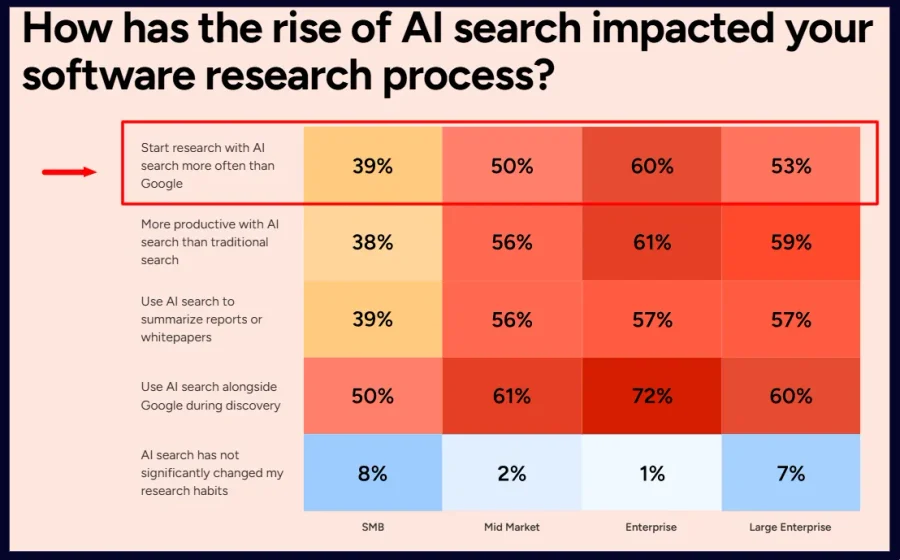
According to PR Newswire, featuring G2 Chief Innovation Officer, Tim Sanders:
“We’re watching the third compression era of the buyer journey unfold in real time. The Yellow Pages compressed the market into the big book. Google compressed it into the first page of results. Now, AI chatbots are compressing it into a single answer. Buyers have moved from reference to inference. Instead of gathering sources and synthesizing the data themselves, they trust AI chatbots to return the shortlist in a single prompt. That disrupts how software vendors need to think about their presence.” — Tim Sanders, Chief Innovation Officer, G2.
That quote reflects how important it has become to get ranked on Google and cited by ChatGPT, Perplexity, Gemini, and other AI search engines.
What good looks like: A writer structures content to be cited from the first draft by adopting clear question-shaped headings, a direct answer near the top of each section, named sources, and self-contained passages an engine can lift without distortion.
What bad looks like: Keyword-stuffed posts, buried answers, a plan to add SEO later, and/or not knowing how to structure content for AI engine extractability.
How to test it: If (by chance) you know how to structure content for AI engines, it should be easy to spot in their published content. If you don’t, ask them how they structure content for SEO and AEO.
Ask them: Show me how you structure a post so an AI engine can quote it, with headings, answers, and sourcing included.
These five criteria tell you what good looks like. You’ll spot a bad fit even faster by learning to read the sample itself.
Red Flags in SaaS Content Samples
With the right SaaS content writing insights, you can filter the SaaS writers to interview and hire from their samples. You might not necessarily need a trial project; one honest read will tell you whether someone gets SaaS and specifically if they’re good for your business.
Watch for these red flags in SaaS content samples:
- Feature-dump posts with no buyer context. The content lists what the product does and never reads like it was written by someone who understands who the content is for and why it’s important to them. The reader can’t tell whether the content is written for them, and nothing in the article moves a champion, evaluator, or economic buyer one step toward a demo.
- Content that reads like rephrased documentation. The content is accurate but lifeless and useless to a buyer weighing a decision. It just restates what your docs already say, so a buyer weighing options learns nothing new from reading the content.
- No data, examples, or original insight. The content repeats what already ranks, giving the reader no reason to trust you over the vendor they read yesterday. Readers are exhausted by the exact same generic content every startup publishes. Without original proof, you sound like everyone else in the category, or worse, like AI slop.
- Posts that survive a name-swap to any SaaS. The content can be used as is for any product. If the copy fits any product, it says nothing specific about any particular product, so an evaluator sees no product understanding and no reason to choose you.
- Obvious AI copy-paste. Copy-and-paste content, straight from the machine, is an immediate trust killer. A reader who spots AI-default phrasing stops trusting the rest, and hidden buyers you never meet quietly rule you out. Cleaning it up burns your editors’ and SMEs’ time on work the writer should have done, so you pay twice for one draft.
Prioritize checking for these red flags because the stakes for B2B SaaS are significant. Bad content doesn’t sit neutral; it costs you credibility with the people you’re trying to win. And the bad content problem has eaten deep with AI making content creation easier; marketing leaders are paying attention.
Freelancer, Agency, or Platform: Choosing the Right Model
There’s no single right model for hiring SaaS writers. I advise founders to match who they hire to their product complexity, content volume, how much editing their team can absorb, and, of course, budget. A specialist freelancer usually gives the deepest product fluency and lowest overhead, since you’re not funding their office, their account managers, or their sales team. An agency gives scale and process but often rotates writers across accounts. A platform gives speed and volume, usually at the cost of the SaaS depth that makes content convert.
You feel the consequences when the fit is wrong. I’ve listened to founders complain about how their last agency left them with more work to do or how a new writer costs them hours in edits.
Hiring a SaaS content writer who fits saves you stress; this table will help you make the right call.
N/B: Slide left if you’re viewing the table on mobile.
| Model | Best for | Product depth | Overhead/edit time | Watch-out |
|---|---|---|---|---|
| Specialist freelancer | High-stakes, decision-stage content on a complex product | High; learns your product directly | Low overhead, minimal edits once they get familiar with your product and editorial style guide | Limited capacity; one person, one calendar |
| Agency | Steady multi-format volume with a managed process | Medium; process is strong, product depth varies | Account-manager overhead; edit time rises when writers rotate | Rotating writers dilutes product fluency |
| Platform/marketplace | Fast, high-volume top-of-funnel output | Low; writers rarely know your product | Cheap per piece, heavy edit, and QA time | Generic drafts that survive a name-swap |
| Embedded specialist | A managed content engine tied to the pipeline | High; works as an extension of your team | Higher engagement cost, lowest internal lift | Requires real access and cross-functional input |
Outsourcing has become the norm, so the question is who and how, not if. In the 10Fold and Sapio Research 2025 study of 400 senior B2B tech marketing executives, 88% relied on outside partners for at least part of their content, even as 91% increased output and only 1 in 5 saw budget boosts above 10%. More output, flat budgets, and a thinner margin for a bad hire. If you’re like any of these 400 senior B2B marketing execs, your SaaS content writer hire has to be spot on.
If you want a SaaS content partner who understands SaaS content and how to drive the right business results for your company, reach out now.
Quick Vetting Checklist for Hiring the Right SaaS Content Writer
Run any candidate through these six yes/no screens before you commit.
- Can they explain one of your features by the job it does for a named persona, not by its spec sheet?
- Did they ask for product access, SME time, or real buyer input before quoting the work?
- Can they name where they’d source buyer language beyond keyword tools — sales calls, support tickets, G2 reviews?
- Does each sample map cleanly to a funnel stage and a specific action it was built to trigger?
- Would the sample break if you swapped in a competitor’s name, or would it survive the swap unchanged?
- Do they structure content to be found and cited by AI engines from the first draft, not as a retrofit?
There are other questions to ask, but these will help you get started with your SaaS content writer assessment.
What Content Writing Services for SaaS Actually Cost and Why Cheap Is Expensive
According to the Editorial Freelancers Association’s 2026 Rate Chart (1,100-plus members surveyed), professional blog writing runs $0.25-$0.40 per word, while expert technical and SaaS writers command roughly $1.00 per word (technical work-for-hire on the EFA chart, with ghostwriting around $0.88–$1.08). Agency retainers commonly land in the $3,000-$10,000 per month range.
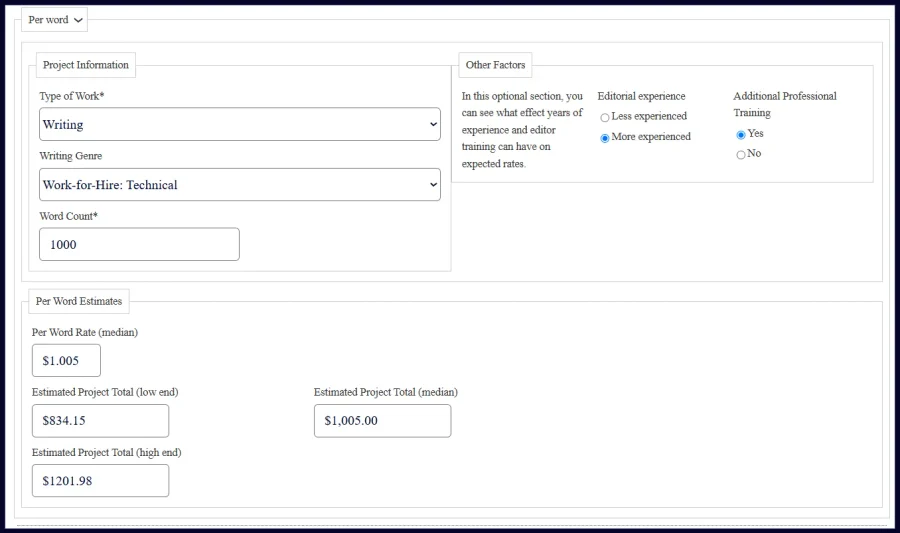
It’s important I mention here that SaaS content writers sometimes charge below or above this average range, depending on other factors that affect what a content writer charges, like industry, availability, and the nature of the project.
On what a cheap SaaS content writer hire does to your team’s time and budget, I’ll use my favorite example;
A $200 article that needs two full rewrites costs you more than a $500 one that comes back clean. I’ve watched it play out on every underpriced engagement: manager hours reviewing weak drafts, SME time fixing inaccurate claims, and the pipeline the post never produced.
How I Approach SaaS Content Differently
Every piece I write starts with the buyer’s problem, is assessed for their business score rating, and maps to a specific stage in the SaaS buying journey. That’s problem-first content, and it’s the core of how I work. It follows four core steps:
- Buyer-problem research. I pull the real language buyers use from community discussions, interviews, sales calls, support tickets, CRM notes, and reviews, so the piece answers an actual objection.
- Intent mapping. I match each topic to buyer intent and funnel stage, prioritizing high business-potential problems over high-volume keywords that never convert.
- Structural depth. I structure the piece to cover the buyer intent completely, using relevant headers, insights, data points, and overall formatting. I also cover all possible “fan-outs” of the key query so the article serves the target members of the buying committee enough to drive conversions.
- AI-ready structure. I also structure every draft for ranking and citation from the first outline, so search engines and answer engines like ChatGPT, Perplexity, Gemini, etc can find, rank, cite, and quote the content.
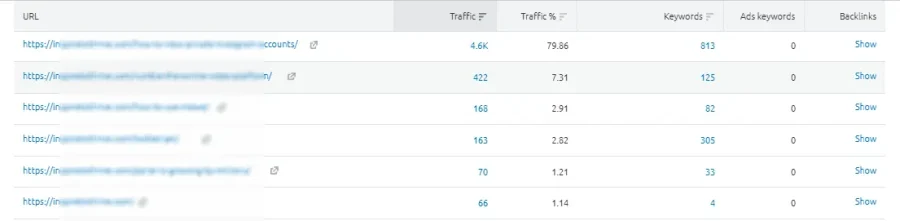
I have results to show for it. One problem-first article I wrote using this framework ranked for over 800 keywords and drove more than 80% of a site’s organic traffic.
You can check my B2B and SaaS content writing service page for more details on how I work and who I work with.
Make Your Next Content Hire the Right One
Plan for both SEO and AEO. The bulk of your buyers now build their shortlist inside AI answer engines before they ever reach your site. With 51% of software buyers researching that way and one in three purchasing from a vendor they had never previously heard of, the writer you hire decides whether your product gets found, trusted, and cited, or stays invisible. Hire wrong, and you pay twice: in missed pipeline and in the manager hours, SME time, and rewrites that cheap content quietly demands.
So prioritize content built to convert and drive pipeline, and stop spending your thin marketing budget fixing content problems.
Reach out now to discuss how we can collaborate to fix your content.
Frequently Asked Questions on Spotting the Right SaaS Content Writer
What’s the Difference Between a SaaS Content Writer and an Average General B2B Writer?
A SaaS content writer understands product-led narratives, long sales cycles, and a buying committee of champions, technical evaluators, and economic buyers. An average general B2B writer can produce clean copy but often defaults to feature descriptions or rephrased documentation. I love to highlight the difference in two distinct places: product fluency without oversimplifying and building technical accuracy into the process. A specialist SaaS content writer also starts from the buyer’s problem and ties the content to a business outcome.
How Do I Brief a Writer on a Technical SaaS Topic?
Give the writer access to the data they need. Hand over a recorded SME call, a product demo, the exact feature scope, and any other internal data that gives a full overview of the product. Also include the target persona and their seat on the buying committee, the funnel stage, and the primary keyword or question. Add three to five real buyer quotes from sales calls, support tickets, and G2 or Capterra reviews that reflect buyer-level language, plus two competitor URLs to beat. Close with a product-team accuracy review before publishing.
Should I Hire a Freelancer or an Agency for SaaS Content?
Match who you hire to your product complexity, volume, and editing capacity. A specialist freelancer usually gives the deepest product fluency and the lowest overhead. An agency scales output but may rotate writers across accounts, and platforms deliver speed at the cost of SaaS depth. If you have a thing budget, you can adopt a hybrid model: a specialist for high-stakes decision-stage content, plus a broader partner for volume.
How Many Blog Posts per Month Should a SaaS Company Publish?
There’s no single right number of SaaS blogs to publish in a month. Base your volume on how much high-quality content your team can produce and review without cutting corners. Two problem-first pieces mapped to a decision stage will move the needle more than ten shallow posts chasing traffic. Publish at the pace you can maintain quality, then scale as the topic pipeline supports it.
How Do I Measure Whether My SaaS Content Is Working?
Measure pipeline signals over pageviews. Track qualified leads, demo requests, product-qualified signals, and the role of content in closed deals, not just sessions and rankings. Rankings and AI citations still matter as leading indicators, but treat them as inputs to revenue, not the goal. Tie content back to sales conversations by asking your team which pieces buyers reference. If a post ranks well but never shows up in a deal, it’s an expensive internal document. Read my post on measuring B2B and SaaS content marketing ROI.
Does SaaS Content Still Matter If Buyers Use AI to Research?
Yes, and arguably more than before. AI engines don’t invent answers about your product; they synthesize and cite existing content. In G2’s The Answer Economy report, 51% of 1076 software buyers now start research in an AI chatbot more often than Google, and 71% rely on AI chatbots for software research. If your content is structured to be found and cited by those engines, you enter shortlists you’d otherwise miss, including those with buyers who’ve never heard of you.